
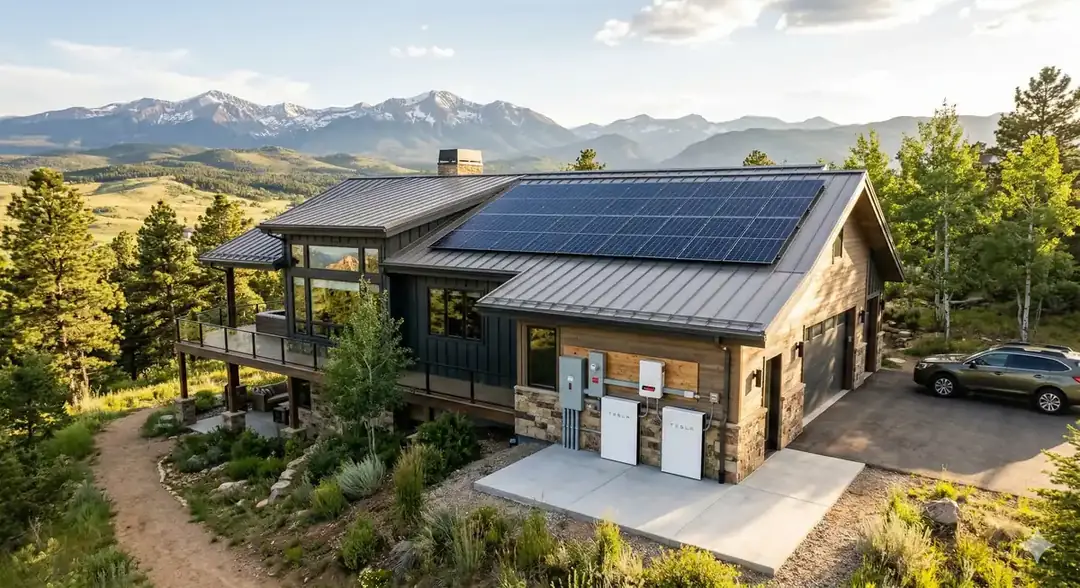
Colorado Solar Incentives 2026: The Complete Picture
The Colorado solar incentives 2026 mix is utility-led rather than state-led. There is no Colorado income tax credit for residential solar panels, a fact worth stating plainly because outdated websites still claim otherwise. What Colorado does offer: Xcel Energy's Solar*Rewards rebates (raised in 2026), a 10 percent state tax credit on home batteries, full 1:1 net metering, and complete sales and property tax exemptions on solar equipment.
Xcel Energy serves most of the Front Range, including Denver, Boulder, and Fort Collins, so its programs set the market. In April 2026 the Colorado PUC approved Xcel's 2026-2027 Renewable Energy Plan, which raised Solar*Rewards for income-qualified customers and disproportionately impacted community customers from $2 to $3 per watt, up to 10 kW AC. That is up to $30,000 off for qualifying households. Standard residential customers earn production-based per-kWh payments instead, at rates that vary by plan year.
Battery Incentives: The 10% State Tax Credit
Colorado's Residential Energy Storage tax credit (form DR-1307) returns 10 percent of a home battery's purchase price, including equipment, sales tax, and freight, but not installation or permitting. It covers tax years 2023 through 2026 under current law, with a bill proposing extension through 2029. Xcel separately offers its Renewable Battery Connect rebate: $1,000 per kW for income-qualified customers (raised from $800 in April 2026), $250 per kW up to $5,000 for standard customers, plus about $100 a year for five years for participating batteries.
Net Metering and the Time-of-Use Catch
Colorado law still requires 1:1 retail net metering, with Xcel applying it to systems up to 1 MW. Excess credits roll month to month, and year-end surplus can roll over or pay out at the prior year's Average Hourly Incremental Cost. The catch is rate design: Xcel moved default residential service to time-of-use rates, so midday solar exports earn credits at cheaper off-peak prices while your evening usage bills at peak prices. Two fixes exist: ask to stay on a flat rate if your utility allows it, or add a battery to shift midday power into the expensive evening hours.
Tax Exemptions and Costs
- Sales tax: fully exempt on solar equipment purchases statewide.
- Property tax: the value solar adds to your home is exempt from property tax.
- Federal: no 25D credit for 2026 purchases; leased systems may carry federal value via the owner's commercial credit.
- Typical cost: Front Range quotes cluster near the $2.50 to $3.00 per watt national band; an 8 kW system runs roughly $20,000 to $24,000 before incentives.
Check any quote against our 2026 cost benchmarks and red flags guide, and confirm Solar*Rewards availability with Xcel before counting the rebate.