
What Is the 48E Commercial Solar Tax Credit?
The 48E commercial solar tax credit is the technology-neutral clean electricity investment credit in Section 48E of the tax code. It lets businesses, nonprofits using elective pay, and third-party solar owners claim 30 percent of what they spend building solar and battery storage projects. Think of it as the business version of the homeowner credit, except the homeowner credit (Section 25D) ended on December 31, 2025, while 48E survived with new deadlines and tighter rules.
A quick vocabulary note. ITC means investment tax credit: a percentage of project cost you subtract from your tax bill. PTC means production tax credit: a payment per kilowatt-hour generated. Section 48E is the ITC side, Section 45Y is the PTC side. Businesses pick one per project. Most solar projects pick 48E because the upfront 30 percent is simpler to finance.
The 2026 Deadlines That Decide Everything
The One Big Beautiful Bill Act (P.L. 119-21) replaced 48E's old decade-long phaseout with a cliff. For wind and solar facilities, the rule is now simple and harsh. Your project qualifies only if it begins construction on or before July 4, 2026, or is placed in service on or before December 31, 2027. A project that starts construction in August 2026 but finishes in 2028 gets nothing.
What counts as beginning construction
This is where the IRS tightened the screws. IRS Notice 2025-42 requires the physical work test for most projects: real on-site work like excavation or installing key components, started before July 5, 2026. Planning, permitting, and paperwork do not count. A federal court vacated that notice in June 2026, restoring the older 5 percent safe harbor in some cases, which means the exact test your project faces depends on current litigation. Document everything and get a tax attorney involved early.
Energy storage gets more room
Standalone battery storage projects are treated better than solar under the new law. The placed-in-service deadline does not apply to energy storage the same way, and storage keeps a longer phaseout schedule. If your project pairs solar with batteries, the storage portion may qualify on a friendlier timeline. Model the two parts separately.
How Businesses Actually Use 48E
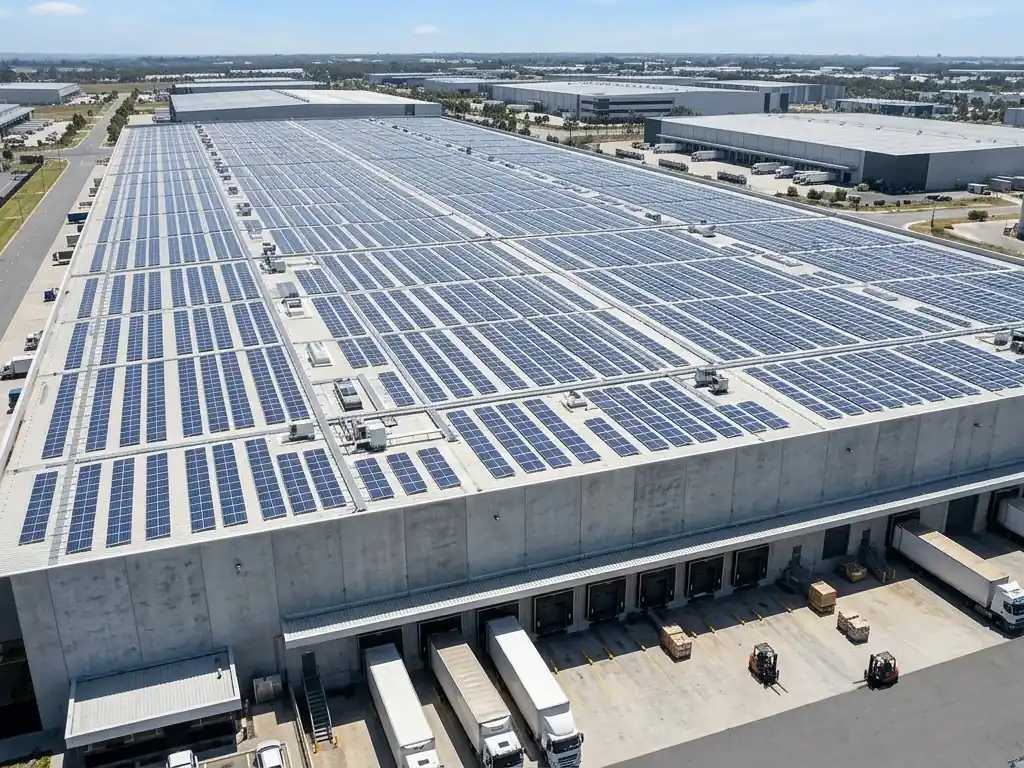
A business that owes federal taxes claims 48E directly on its return, cutting its tax bill by 30 percent of the project cost. A $500,000 warehouse solar array generates a $150,000 credit. Businesses without enough tax liability have two more doors. Transferability lets them sell the credit to another company for cash, typically 90 to 95 cents on the dollar. Elective pay, also called direct pay, lets tax-exempt organizations like schools and nonprofits receive the credit as a cash refund from the IRS.
The third door is the lease model, which is why 48E matters to homeowners too. When a solar company owns panels on your roof through a lease or PPA, that company is the commercial owner and claims 48E itself. Competition pushes much of that 30 percent into lower lease pricing, which is why 2026 prepaid leases can run roughly 30 percent below equivalent cash purchases. Our lease vs buy guide walks through that math.
FEOC Rules: The New Sourcing Trap
Starting in 2026, projects with ties to a foreign entity of concern, meaning China, Russia, Iran, or North Korea, can be disqualified from 48E. The rules look at who controls the project company and where key components and materials come from. Because much of the global solar supply chain runs through China, this is not a theoretical risk. Ask every developer for a written FEOC compliance statement and keep it with your tax records. IRS interim guidance arrived in February 2026, and the details are still being filled in.
What Businesses Should Do Right Now
- If your project already began construction before July 2026: protect your documentation. Photograph physical work, keep dated invoices, and confirm your begin-construction position with counsel.
- If you are planning a 2026 project: compress your timeline. Permitting and interconnection queues are the usual killers, so start utility applications immediately.
- If you are a nonprofit or school: elective pay still works, but the same deadlines apply. Do not assume tax-exempt status buys extra time.
- If you lease your roof to a solar company: ask how the company is meeting the 48E deadlines and get the pass-through value reflected in your rate in writing.
- Everyone: get a tax professional who has done 48E filings before. The credit is valuable precisely because the rules are unforgiving.