
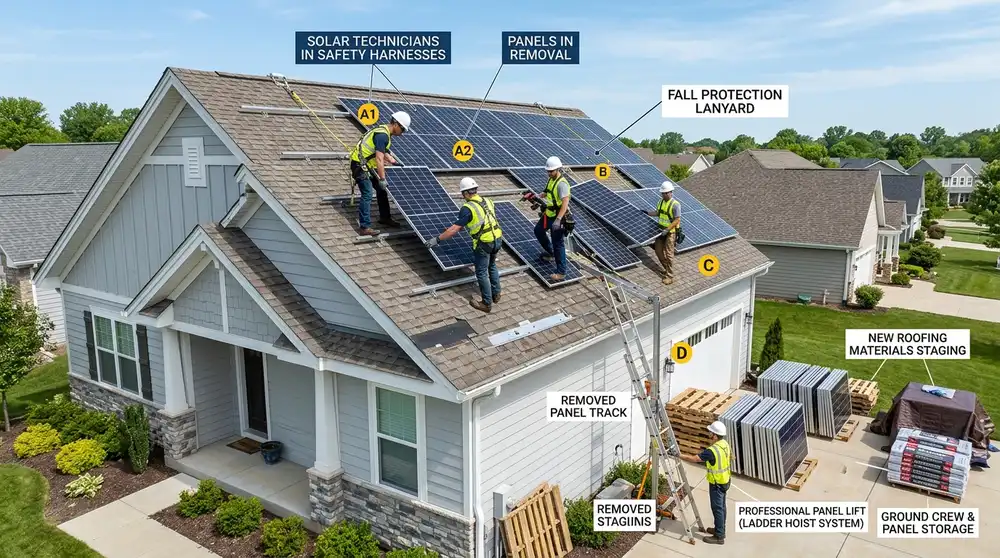
Solar panels are built like tanks. Modern silicon panels easily generate clean electricity for 25 to 30 years without breaking down. But when severe hail storms strike or your asphalt shingles reach the end of their 20-year lifespan, understanding the true solar panel removal and reinstallation cost becomes critical to protecting your investment.
When your roof needs a complete teardown and re-shingling, the solar panels sitting on top cannot simply be worked around. Every panel, microinverter, electrical conduit, and mounting rail must be carefully taken down, moved to safety, and re-installed once the new roof is in place. In the construction industry, this process is known as Detach and Reset (or Solar R&R).
1. Solar Panel Removal and Reinstallation Cost Breakdown by System Size (2026)
Solar detach and reset pricing depends mainly on how many panels you have on your roof, how steep the roof is, and what type of roofing material is underneath. Here is the full cost breakdown based on hundreds of verified residential jobs across the United States in 2026:
| System Size (kW) | Panel Count | Removal Cost (Phase 1) | Reinstall & Flash (Phase 2) | Total Turnkey R&R Cost |
|---|---|---|---|---|
| Small (4 kW) | 10 Panels | $1,000 – $1,400 | $1,500 – $2,100 | $2,500 – $3,500 |
| Medium (6.5 kW) | 16 Panels | $1,500 – $2,100 | $2,200 – $3,100 | $3,700 – $5,200 |
| Standard (8 kW) | 20 Panels | $1,800 – $2,600 | $2,700 – $3,900 | $4,500 – $6,500 |
| Large (10 kW) | 25 Panels | $2,200 – $3,200 | $3,300 – $4,800 | $5,500 – $8,000 |
| Extra Large (12 kW) | 30 Panels | $2,600 – $3,800 | $3,900 – $5,600 | $6,500 – $9,400 |
| Estate (16 kW) | 40 Panels | $3,400 – $4,800 | $5,100 – $7,200 | $8,500 – $12,000 |
2. Why You Should Never Let a Roofer Touch Your Solar Panels
When getting estimates for a new roof, almost every roofing contractor will cheerfully tell you: "Don't worry, my roofing crew can take those solar panels down for an extra thousand bucks!"
Never agree to this. While roofing crews are skilled at laying shingles, they are not licensed solar electricians. Here is what happens when inexperienced roofers handle solar arrays:
- You Void Your 25-Year Manufacturer Warranties: Brands like Enphase, SolarEdge, Tesla, REC, and Qcells require qualified technicians to disconnect and handle their equipment. If an unlicensed person unplugs your microinverters or damages connectors, the manufacturer will void your warranty immediately.
- High-Voltage DC Arc Danger: Solar panels produce live electricity whenever sunlight touches them—even when your home's main power switch is turned off. Unplugging connectors under high DC load creates dangerous electrical sparks (arcing) that can cause severe electrical burns and start fires.
- Invisible Micro-Cracks: Solar cells inside the tempered glass are thin silicon wafers. When roofers walk on panels or stack them directly on top of each other without padded spacers, the silicon cracks invisibly. The panel might look fine on the outside, but its electricity output will plummet by 40% to 60% within months.
- Reusing Old Leaky Mounts: Roofers often reuse old, bent mounting brackets and dried-out rubber gaskets instead of installing proper brand-new flashed roof penetrations. That ruins your new roof and guarantees leaks during the first heavy rainstorm.
3. The 5-Step Solar Detach & Reset Playbook
A professional solar detach and reset job follows a strict five-step coordination process between you, your solar contractor, and your roofing company:
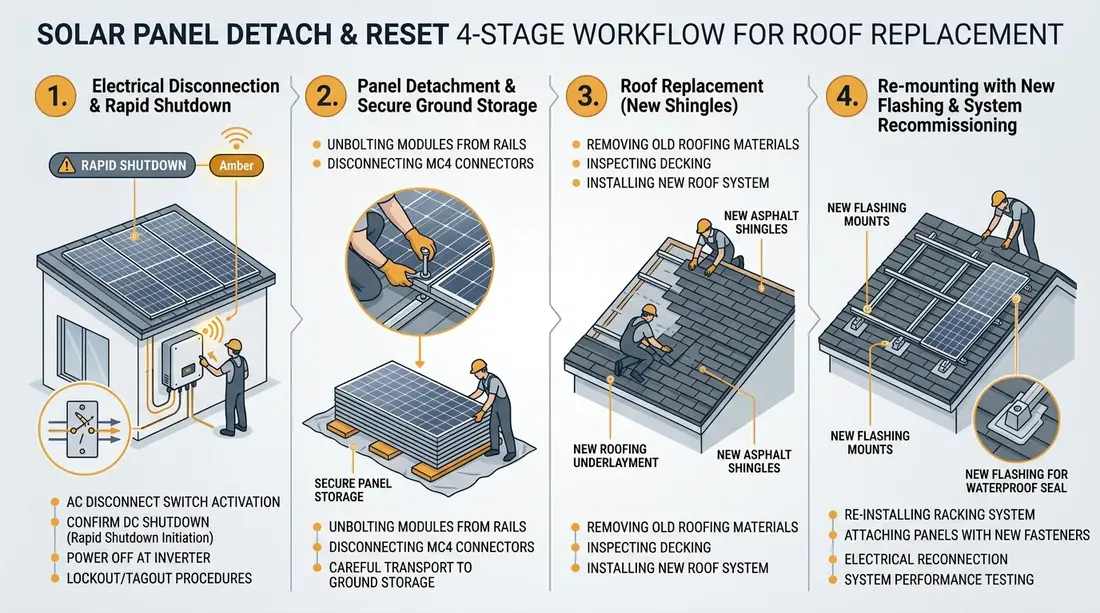
- Phase 1: Production Snapshot & Pre-Inspection (Day 0): The solar technician checks your inverter monitoring app, logs the health of every panel and microinverter, and takes photos of your roof to document baseline performance.
- Phase 2: Safe Decommissioning & Ground Storage (Day 1): Technicians switch off the AC/DC disconnect boxes, unclip the wiring harness, unbolt the panels, and lower them using a padded ladder hoist. Panels are stored safely in your garage or shed on wooden pallets with protective foam spacers between each piece of glass.
- Phase 3: Roof Teardown & New Roof Installation (Days 2–5): The roofing company tears off old shingles, inspects the plywood decking, installs ice-and-water shield underlayment, and installs the brand-new roofing materials.
- Phase 4: Installing New Flashed Attachments (Days 6–7): The solar crew returns and bolts down brand-new code-compliant flashing brackets (like IronRidge FlashFoot or Quick Mount PV). They seal the mounting points with premium butyl sealant so the roof penetrations never leak.
- Phase 5: Remounting & Recommissioning (Day 8): Panels and microinverters are reinstalled, torqued to exact manufacturer specifications, and the system is powered back on. The technician confirms with the utility and monitoring app that all panels are producing power at 100% capacity.
🧮 Compare Reinstallation Costs vs. New Solar System Economics
If your existing solar panels are over 15 years old, re-investing $4,000+ in removal and reinstallation may have a lower financial return than upgrading to high-efficiency modern panels. (No federal tax credit applies to 2026 installs, so compare options on gross cost.) Run your numbers across our US calculators:
4. How to Get Homeowners Insurance to Pay 100% of the Cost
If your roof replacement is caused by a sudden storm event—such as large hail, hurricane winds, or a fallen tree—your homeowners insurance policy will almost certainly pay for the solar removal and reinstallation. Here is how to handle your insurance claim so you do not get stuck with the bill:
- Check Your Policy: Rooftop solar panels are permanently attached to your home structure, meaning they are covered under Coverage A (Dwelling), not personal property.
- The Magic Line Item: When your insurance adjuster writes the claim estimate, make sure they include the line item titled "Detach & Reset Solar Panel Array". In the insurance estimating software (Xactimate), this code is typically
ELE SOLRorRFG SOLR. - Request a Supplement for New Hardware: Standard insurance estimates sometimes only budget $100 per panel, which is too low. Have your certified solar contractor submit a written "supplement request" showing the cost of brand-new flashed roof mounts, safety equipment, and electrical recommissioning. Insurance companies routinely approve these supplements.
💡 Pro Tip: What If You Have a Solar Lease or PPA?
If you do not own your solar panels (they are leased through Sunrun, Tesla, or another solar provider), read your contract carefully. Most solar lease contracts specify that only the leasing company is allowed to touch the panels. Some companies offer one free or discounted detach-and-reset during your 20-year term, while others charge a fixed fee (typically $1,500 to $3,000). Always notify your leasing company at least 4 to 6 weeks before your roof replacement begins.
5. Special Roof Types: Tile, Metal, and Flat Roof Costs
The numbers in our guide apply to standard asphalt shingle roofs. If your house has a different roofing material, the labor and hardware costs will change:
| Roof Type | Average Cost Per Panel | Special Considerations |
|---|---|---|
| Asphalt Shingle | $150 – $250 | Standard flashing mounts; fastest and most affordable job. |
| Concrete or Clay Tile | $250 – $380 | Fragile tiles require careful walking; installers must source replacement tiles for any cracked during the job. |
| Standing Seam Metal | $160 – $240 | Uses clamp attachments (like S-5! clamps) with zero roof penetrations. Fast removal and no flashing needed. |
| Flat Membrane (TPO/EPDM) | $200 – $320 | Often ballasted with concrete pavers that must be moved; requires hot-air welded slip sheets. |
6. Key Questions to Ask Contractors Before Hiring
Before signing any contract for solar removal and reinstallation, ask the contractor these four essential questions:
- "Are your technicians NABCEP-certified and licensed electricians?" (Ensures warranty protection and safe electrical shutdowns).
- "Are brand-new roof flashing mounts included in your price quote?" (Never allow an installer to reuse old flashing feet on a new roof).
- "Do you provide a workmanship warranty against roof leaks?" (Reputable solar contractors provide a 5- to 10-year roof penetration warranty).
- "Will you handle production verification and recommissioning with my inverter app?" (Ensures every single panel is actively generating electricity before final payment).