 SolarSavings

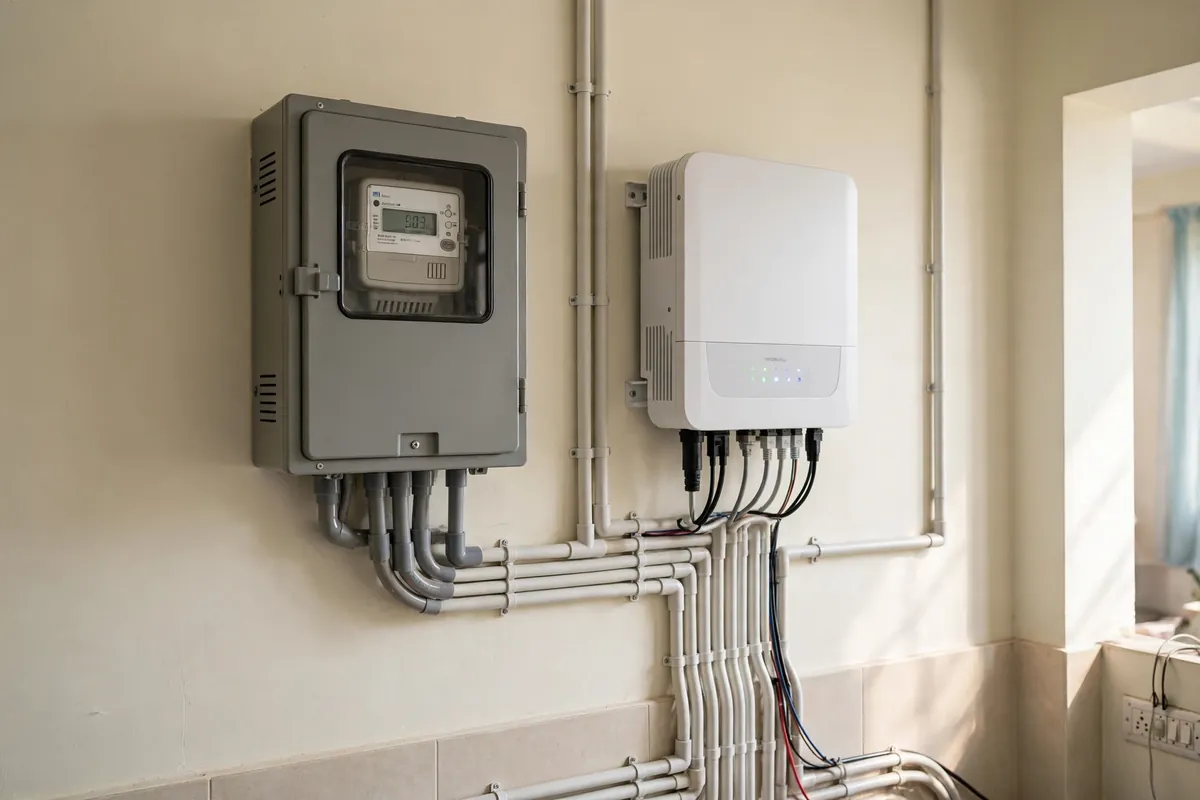
Net metering in Madhya Pradesh is what turns your rooftop panels into bill savings: a bi-directional meter tracks the solar power you send to the grid by day and the grid power you use by night, and you are billed only for the net difference. The framework is set by MPERC (Madhya Pradesh Electricity Regulatory Commission, the state's power regulator), and the three DISCOMs, MPPKVVCL in the west, MPMKVVCL in the centre, and MPPuKVVCL in the east, run the on-ground process. This guide explains the rules, the step-by-step process, and the ground realities to plan for.
How Net Metering in Madhya Pradesh Works
When your panels generate more than your home consumes, the surplus flows to the grid through a bi-directional meter, which is a two-way meter recording import and export separately. At billing time, exported units are subtracted from imported units, and you pay for the difference. Surplus beyond your monthly use is banked, which means carried forward as credit to later bills, under the settlement cycle your DISCOM notifies.
MPERC's rooftop regulations set the eligibility, technical standards, and settlement principles, while each DISCOM publishes its own application formats and office procedures. This is why MP homeowners report different experiences by zone: the rules are common, but the paperwork path runs through three separate organisations. Your vendor must file the net-metering application and coordinate the inspection; confirm this is in the written agreement.
MP net metering at a glance
Framework: MPERC rooftop regulations. DISCOMs: MPPKVVCL (west), MPMKVVCL (central), MPPuKVVCL (east). Process: portal application, feasibility, installation, inspection, bi-directional meter, commissioning. Surplus: banked and settled per DISCOM notification. Timelines vary by zone.
Step-by-Step Net Metering Process in MP
- Application. Your vendor files the net-metering application on pmsuryaghar.gov.in with your consumer number, proposed capacity, and system diagram, addressed to your zone's DISCOM.
- Technical feasibility. The DISCOM checks whether the local transformer can take the extra solar capacity. Ask the vendor to verify this with the division office before you pay the booking amount.
- Installation. Two to four days for a typical home system once feasibility clears.
- Work completion report. The vendor declares the installation complete and compliant.
- Inspection and meter. The DISCOM inspects safety and wiring standards, then installs the bi-directional meter. Some divisions levy meter-related charges; ask for the current schedule in writing.
- Commissioning. The commissioning certificate makes the system official and starts the subsidy clock.
Plan for eight to twelve weeks end to end, with feasibility and inspection as the variable stages. Homeowners in MP report that physical documentation is still asked for at division offices despite the online portal, so keep printed copies of everything: application, feasibility approval, invoices, and the DCR declaration.
Surplus Settlement and Billing in MP
Exported units first offset your imports within the billing cycle, and banked surplus carries forward under your DISCOM's settlement cycle. Year-end or cycle-end surplus is settled at the rate your DISCOM notifies, which can change, so treat any per-unit figure you hear as indicative and confirm the current rate on your bill or the DISCOM website. Billing continues on your domestic slab structure against net units, so every solar unit directly cuts the energy-charge portion of the bill. Fixed charges and duties continue unchanged.
Technical Standards MPERC Expects
MPERC's framework sets the technical bar your plant must clear at inspection. The inverter must have anti-islanding protection, which is the safety feature that shuts the inverter down when the grid fails so repair crews are not endangered. The bi-directional meter must meet the accuracy class your DISCOM specifies, and the installation needs proper earthing and lightning protection as per the wiring code. None of this is your job to engineer, but it is your job to make sure the vendor's quotation names compliant equipment: ask for the inverter datasheet showing anti-islanding certification and confirm the meter will be the DISCOM's own calibrated unit, not a private meter.
Ground Realities to Plan For in MP
MP has excellent sunshine but uneven execution, so go in with your eyes open. Zone offices apply the same regulations differently, meter installation can lag behind inspection, and import-export reading errors on bills are reported often enough that you should photograph your meter on commissioning day. None of this is a reason to skip solar; it is a reason to pick a vendor who has commissioned plants in your zone before and to track every reference number yourself rather than relying on follow-up calls alone.
- Keep paper copies. Division offices may ask for physical documents even after online submission.
- Confirm charges upfront. Ask the division office for the current schedule of meter and inspection charges in writing before installation.
- Photograph meter readings. On commissioning day and monthly after, so billing disputes are settled with evidence.
- Escalate in writing. If a stage stalls beyond three weeks, write to the division office with your reference number, then to the DISCOM's consumer grievance forum.
Frequently Asked Questions
Which DISCOM handles net metering in my part of MP?
MPPKVVCL for the west zone (Indore region), MPMKVVCL for the central zone (Bhopal region), and MPPuKVVCL for the east zone. Your electricity bill names your DISCOM.
How long does net metering take in Madhya Pradesh?
Typically eight to twelve weeks end to end. Feasibility and inspection are the variable stages and differ by zone. Follow up at your division office with the application reference number if a stage stalls.
What is banking of solar units?
Banking is the carry-forward of your surplus solar units as credit to later billing months. Exported units first offset your current bill's imports; the remainder banks forward under your DISCOM's settlement cycle.
How is surplus solar power paid for in MP?
At the end of the settlement cycle, remaining surplus is settled at the rate your DISCOM notifies, which changes from time to time. Confirm the current rate on your bill or the DISCOM website rather than relying on old figures.
Are there extra charges for the net meter in MP?
Some divisions levy meter-related or inspection charges; the schedule varies by zone. Ask your division office for the current charges in writing before installation so your vendor's quote matches reality.
What if my DISCOM office keeps asking for physical documents?
This is commonly reported in MP despite the online portal. Keep printed copies of every submission ready: application, feasibility approval, invoices, and the DCR declaration. It costs little and saves weeks.