 SolarSavings

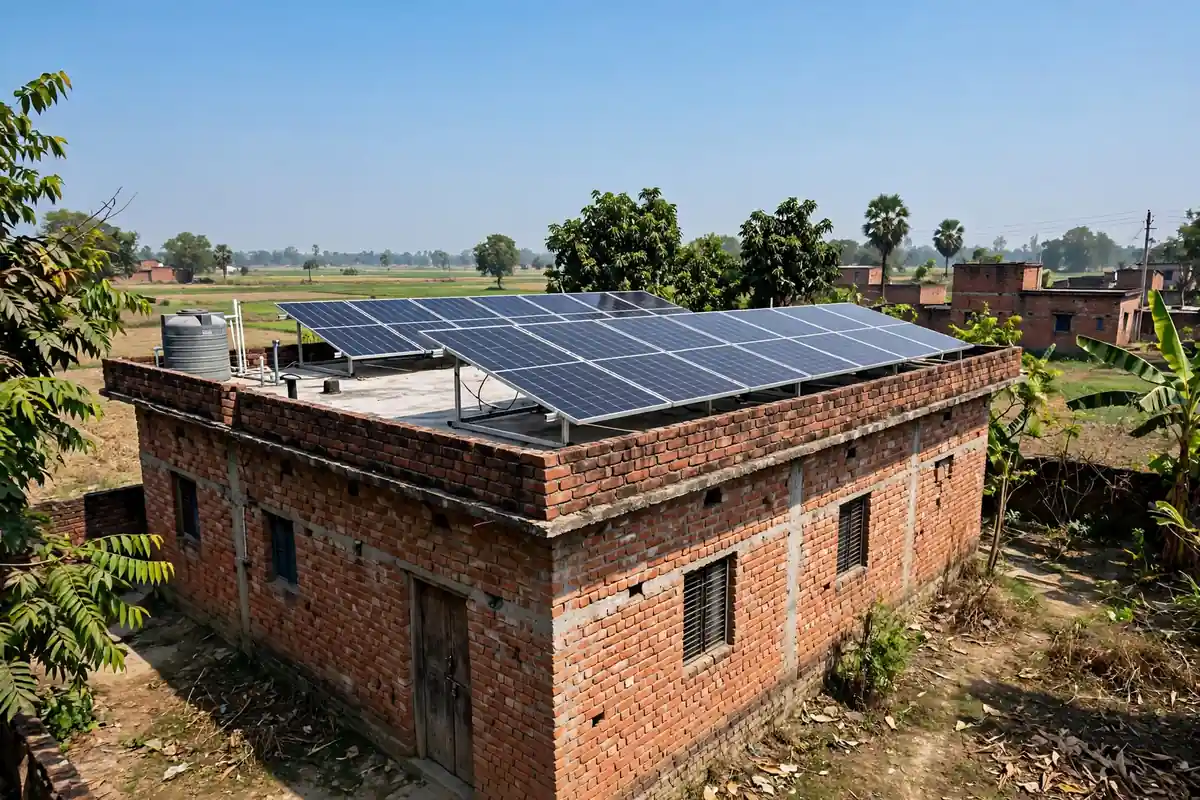
The solar subsidy in Bihar brings a 3 kW rooftop system within reach of a middle-class household. Under the PM Surya Ghar Muft Bijli Yojana, the central government pays ₹30,000 for a 1 kW system, ₹60,000 for 2 kW, and ₹78,000 for 3 kW or more, and the money lands directly in your bank account after the plant is commissioned. Bihar has also announced an extra state top-up under the Mukhyamantri Solar Protsahan Yojana, which would take combined support close to ₹98,000 for eligible homes. This guide explains the exact amounts, who qualifies, how to apply through your DISCOM, and when the money actually arrives.
Solar Subsidy in Bihar: Exact Amounts for 2026
For homes in Bihar, the central subsidy is ₹30,000 for 1 kW, ₹60,000 for 2 kW, and ₹78,000 for 3 kW and above. These slabs are fixed nationwide and do not change by district. The subsidy is called central financial assistance (CFA), which is the government's grant for rooftop solar, and it is paid only for systems installed by registered vendors using DCR panels, which are modules built with Indian-made solar cells.
On top of the central amount, the Bihar government has announced a state top-up under the Mukhyamantri Solar Protsahan Yojana. Press reports put the announced top-up at ₹10,000 for smaller systems and ₹20,000 for 3 kW systems, which would take total support to about ₹98,000 for a 3 kW plant. Treat this as announced rather than guaranteed: it has been reported in the press but check the current position on the BREDA (Bihar Renewable Energy Development Agency, the state's nodal agency for renewables) website or with your DISCOM before you budget around it.
A typical 3 kW rooftop system in Bihar costs about ₹1.7 to ₹2.0 lakh before subsidy in 2026. After the ₹78,000 central CFA, the net cost is roughly ₹95,000 to ₹1.25 lakh. If the announced state top-up materialises, the net cost could fall below ₹1 lakh. Because Bihar's domestic tariffs rise steeply with consumption, most households recover the net cost through bill savings in about four to six years, and the panels keep producing for 25 years.
Bihar subsidy at a glance
1 kW: ₹30,000 central. 2 kW: ₹60,000 central. 3 kW and above: ₹78,000 central. Announced Bihar top-up: ₹10,000 to ₹20,000 (Mukhyamantri Solar Protsahan Yojana, press-reported, confirm before budgeting). Paid as direct bank transfer after commissioning. DCR panels are compulsory.
Who Is Eligible for the Subsidy in Bihar
Eligibility follows the national PM Surya Ghar rules, and Bihar adds no extra conditions of its own for the central CFA. You qualify if you are an Indian citizen with a residential electricity connection in Bihar, you own the house or have the owner's written consent, your sanctioned load is within the DISCOM's rooftop limit, and you have not claimed a solar subsidy before. The electricity connection must be in the applicant's name or a close family member's name with matching Aadhaar details.
- Residential connection. The scheme covers homes, not shops or factories. Your bill should show a domestic tariff category from NBPDCL (North Bihar Power Distribution Company Limited) or SBPDCL (South Bihar Power Distribution Company Limited), the two distribution companies that serve Bihar.
- First-time claimant. If your household has already received a government solar subsidy, you cannot claim again. The portal checks this against your consumer number.
- Registered vendor and DCR panels. The installation must be done by a vendor registered on pmsuryaghar.gov.in, using DCR modules. This is where most rejections happen, so confirm both before the vendor starts work.
- Net-metered and commissioned. The subsidy is released only after your DISCOM inspects the plant, fits the bi-directional meter, and issues the commissioning certificate.
Tenants can apply with the house owner's written consent, and the subsidy is paid to the bank account linked with the application. Housing societies can apply for common-area systems, though the process runs through the society's connection rather than individual flats.
How to Apply for the Solar Subsidy in Bihar
Applications run through the national portal, and your DISCOM handles the Bihar-side steps. The full sequence usually takes six to ten weeks from registration to commissioning, though DISCOM workloads vary by district and season.
- Register on pmsuryaghar.gov.in. Select Bihar, then your DISCOM (NBPDCL for north Bihar districts, SBPDCL for south Bihar districts including Patna), and enter your consumer number exactly as printed on your electricity bill.
- Get feasibility approval. Your DISCOM checks whether the local transformer can take your proposed capacity. In July 2026, BERC (Bihar Electricity Regulatory Commission, the state's power regulator) waived the application fee and meter testing charges for domestic PM Surya Ghar consumers, so these steps now cost nothing.
- Choose a registered vendor and install. Pick a vendor from the portal's Bihar list, sign a written agreement, and get the plant installed. Insist on DCR panels and keep the GST invoice.
- Submit the work completion report. Your vendor files this with the DISCOM, declaring the installation matches the approved design.
- Inspection and net meter. The DISCOM inspects the plant and installs the bi-directional meter that records both import and export.
- Commissioning and subsidy claim. After the commissioning certificate, submit your bank details on the portal. The CFA arrives as a direct benefit transfer (DBT), which is money paid straight into your bank account, typically within 30 to 45 days.
Keep copies of every submission and every receipt. If the portal shows your application stuck at one stage for more than two weeks, call your DISCOM division office with the application reference number rather than waiting silently.
What the Subsidy Does Not Cover
The subsidy covers part of the system cost, not the whole project, so budget for the gaps. It does not cover the cost of a new electricity connection, load enhancement beyond the free limits, or any civil work on your roof such as waterproofing or a new shed. Batteries are not subsidised under PM Surya Ghar, and neither are repairs to old wiring that the DISCOM flags as unsafe. Your vendor's quote should list these separately so you are not surprised later.
The subsidy also does not protect you from a bad installer. The government's role ends at paying the CFA for a compliant plant; choosing a competent vendor, checking warranties, and making sure the net-metering paperwork is filed remain your responsibility. Our Bihar vendor verification guide walks through exactly how to check a firm before you pay.
Frequently Asked Questions
What is the total solar subsidy in Bihar for a 3 kW system?
₹78,000 central CFA for 3 kW and above. Bihar has announced an additional state top-up under the Mukhyamantri Solar Protsahan Yojana, press-reported at ₹10,000 to ₹20,000, which would take combined support to about ₹98,000. Confirm the current top-up position on the BREDA website or with your DISCOM before budgeting.
Who are NBPDCL and SBPDCL, and which one serves me?
They are Bihar's two power distribution companies. NBPDCL (North Bihar Power Distribution Company Limited) serves north Bihar districts, and SBPDCL (South Bihar Power Distribution Company Limited) serves south Bihar including Patna. Your electricity bill shows which one you belong to, and you select it during portal registration.
Are DCR panels compulsory for the Bihar subsidy?
Yes. Central financial assistance is paid only for DCR modules, which are panels built with Indian-made solar cells. Ask your vendor for the manufacturer's DCR declaration and match serial numbers at delivery. Non-DCR panels disqualify the entire subsidy.
How long does the subsidy take to arrive in Bihar?
After commissioning and bank detail submission, the CFA typically arrives as a direct bank transfer within 30 to 45 days. Delays usually come from mismatched bank account names or Aadhaar details, so check these on the portal before you submit.
Is there really a fee waiver for rooftop solar in Bihar?
Yes. In July 2026, BERC waived the application fee and meter testing charges for domestic consumers installing rooftop solar under PM Surya Ghar, following a joint petition by NBPDCL and SBPDCL. Load enhancement and related processing for eligible homes also got simpler.
Can tenants in Bihar apply for the solar subsidy?
Yes, with the house owner's written consent. The application runs on the owner's electricity connection details, and the subsidy is paid to the bank account linked in the application. Get the consent in writing before registration.