 SolarSavings

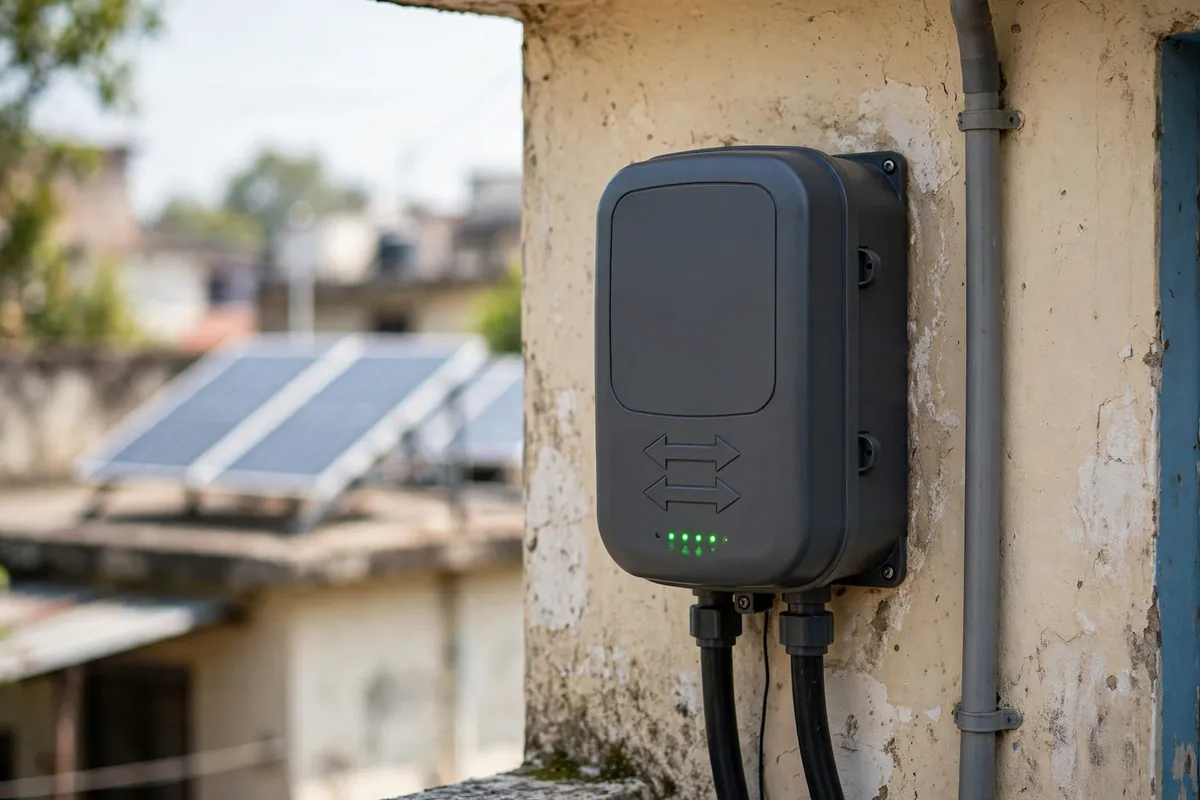
Net metering in Bihar is the arrangement that lets your rooftop solar plant earn its keep: a bi-directional meter records the power you send to the grid during the day and the power you draw at night, and your bill reflects only the net usage. The framework is set by BERC (Bihar Electricity Regulatory Commission, the state's power regulator) under its Net and Gross Metering Regulations, and NBPDCL and SBPDCL handle the on-ground process. In July 2026, BERC waived the application fee and meter testing charges for domestic PM Surya Ghar consumers, which removed the two most common cost complaints. This guide explains the rules, the step-by-step process, and how surplus settlement works.
How Net Metering in Bihar Works
When your solar panels produce more than your home uses, the extra units flow to the grid through a bi-directional meter, which is a two-way meter that separately records import and export. At billing time, your DISCOM subtracts the exported units from the imported units and bills you for the difference. If you export more than you import in a month, the surplus carries forward as credit to the next bill under the banking arrangement, which is the carry-forward of unused solar units across billing months.
The governing rules are the BERC (Net Metering and Gross Metering) Regulations, 2018, which cover eligibility, metering standards, and settlement. Gross metering, where all solar power is sold to the DISCOM at a fixed rate, is a separate option mostly used by commercial projects; homes under PM Surya Ghar use net metering. Your vendor must file the net-metering application as part of the installation, and the plant cannot be commissioned without DISCOM inspection and the meter installation.
Bihar net metering at a glance
Framework: BERC Net and Gross Metering Regulations, 2018. DISCOMs: NBPDCL (north), SBPDCL (south). Application fee and meter testing charges: waived for domestic PM Surya Ghar consumers since July 2026. Surplus: banked month to month and settled per the DISCOM's notified rate. Your vendor files the application.
Step-by-Step Net Metering Process in Bihar
The process runs through the national portal and your DISCOM's division office. Your vendor should handle the filings; your job is to track the reference numbers and keep copies.
- Portal application. After registering on pmsuryaghar.gov.in, your vendor files the net-metering application with your consumer number, proposed capacity, and a single-line diagram of the system.
- Technical feasibility. The DISCOM checks whether your local transformer and service line can absorb the solar power. This is usually the longest wait. No application fee applies for domestic PM Surya Ghar consumers after the July 2026 BERC waiver.
- Installation. Once feasibility is cleared, the vendor installs the plant, typically in two to four days for a home system.
- Work completion report. The vendor declares the installation complete and matching the approved design.
- Inspection and meter installation. The DISCOM inspects the plant for safety and standards compliance, then installs the bi-directional meter. Meter testing charges are waived for eligible domestic consumers.
- Commissioning. The DISCOM issues the commissioning certificate. Only now is the system officially on record, and only now does the subsidy process move forward.
Typical end-to-end timelines run six to ten weeks, with the feasibility and inspection stages accounting for most of the wait. If your application sits at one stage for over two weeks, follow up at the division office with your reference number. Do not make your vendor's final payment until the meter is commissioned and showing readings.
Surplus Settlement and Billing in Bihar
Surplus units are first adjusted against your consumption within the billing cycle, and unused credits carry forward to subsequent months under the banking arrangement. At the end of the settlement period, any remaining surplus is settled at the rate your DISCOM notifies under the BERC framework. Third-party tariff trackers reported Bihar's surplus settlement around ₹2.45 per unit in 2026, but treat this as indicative: the payable rate is whatever NBPDCL or SBPDCL notifies from time to time, so confirm the current rate on your bill or the DISCOM website.
Billing follows your existing domestic slab structure, with the net units determining which slab your consumption falls into. This matters in Bihar because domestic tariffs rise steeply with usage: every unit your solar plant offsets is a unit you do not buy at the higher slabs. Fixed charges and electricity duty continue as before; solar reduces the energy charge portion of the bill, not the fixed components.
Common Net Metering Problems in Bihar and How to Avoid Them
Most net-metering trouble in Bihar comes from paperwork gaps rather than technical faults. The common ones are a vendor who never files the application, a feasibility rejection because the transformer is already saturated with solar connections in the area, and inspection failures over wiring that does not meet the DISCOM's safety standard. Each has a straightforward fix if caught early.
- Vendor does not file. Confirm in writing before signing that net-metering filing is included in the quoted price, and ask for the application reference number within a week of installation.
- Feasibility delays. Ask the vendor to check transformer capacity with the division office before you pay the booking amount, especially in dense urban feeders.
- Inspection failures. Insist the vendor follows the DISCOM's wiring and earthing specification; a failed inspection means a repeat visit and lost weeks.
- Meter reading disputes. Photograph the bi-directional meter readings on installation day and keep the commissioning certificate; these settle most billing arguments.
If a dispute with the DISCOM does not resolve at the division level, BERC's consumer grievance redressal forum is the escalation path. Keep every reference number and receipt, because grievance forums decide on documents, not memories.
Frequently Asked Questions
What are the net metering charges in Bihar in 2026?
For domestic consumers under PM Surya Ghar, BERC waived the application fee and meter testing charges in July 2026 (Case No. 29/2026). This followed a joint petition by NBPDCL and SBPDCL. Confirm with your division office that the waiver is applied to your application.
Which DISCOM handles net metering for my home in Bihar?
NBPDCL (North Bihar Power Distribution Company Limited) for north Bihar districts and SBPDCL (South Bihar Power Distribution Company Limited) for south Bihar including Patna. Check your electricity bill for your DISCOM, then register on pmsuryaghar.gov.in under it.
How is surplus solar power settled in Bihar?
Surplus units are banked month to month against future consumption. At the end of the settlement period, remaining surplus is paid at the rate notified by your DISCOM under the BERC framework. Third-party trackers reported around ₹2.45 per unit in 2026, but confirm the current notified rate on your bill or the DISCOM site.
How long does net metering approval take in Bihar?
Typically six to ten weeks end to end, with technical feasibility and inspection taking most of the time. Follow up at the division office with your application reference number if any stage stalls beyond two weeks.
Can I install solar without net metering in Bihar?
You can, but you would waste daytime surplus and lose the subsidy, which requires a commissioned, net-metered plant. Net metering is what turns surplus generation into bill credit, so it is central to the economics.
What is the BERC Net and Gross Metering Regulation?
It is the 2018 regulation by the Bihar Electricity Regulatory Commission that sets the rules for rooftop solar grid connection in the state: who is eligible, how metering works, and how surplus is settled. Your vendor's installation must comply with it for the DISCOM to commission your plant.