 SolarSavings
Delhi Solar Policy 2026: The Dual Subsidy Advantage
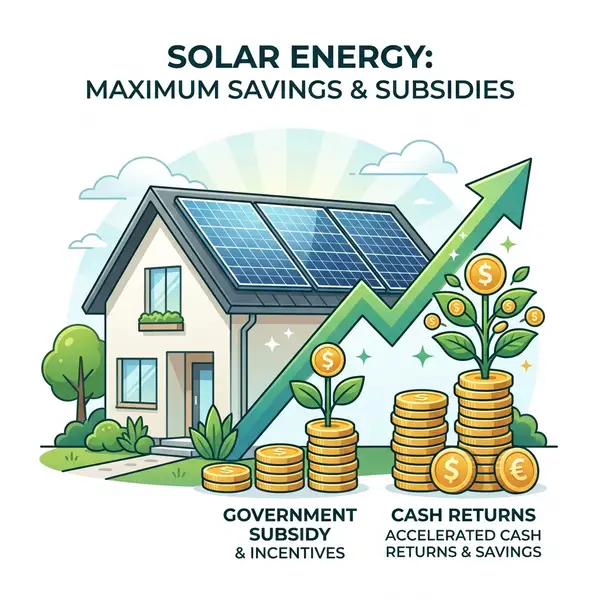
Unlike most Indian states that rely solely on the central PM Surya Ghar scheme, the National Capital Territory (NCT) of Delhi offers a highly lucrative, two-pronged financial benefit for residential solar installations. By combining the upfront Central Financial Assistance (CFA) with the unique Delhi Generation-Based Incentive (GBI) rolled out under the Delhi Solar Policy, homeowners in the capital enjoy the fastest ROI in the country.
1. The Upfront Central Subsidy (PM Surya Ghar)
The central subsidy, administered by the MNRE, slashes your initial capital investment. Whether you are a consumer under BSES Rajdhani Power Limited (BRPL), BSES Yamuna (BYPL), or Tata Power DDL (TPDDL), the MNRE pays this via Direct Benefit Transfer (DBT) directly into your Aadhaar-linked bank account approximately 30 days after your net meter is commissioned.
| System Capacity (kW) | Central CFA Subsidy Amount | Average Gross Cost in Delhi NCR | Your Net Upfront Cost |
|---|---|---|---|
| 1 kW | ₹30,000 | ₹60,000 - ₹65,000 | ₹30,000 - ₹35,000 |
| 2 kW | ₹60,000 | ₹1,10,000 - ₹1,20,000 | ₹50,000 - ₹60,000 |
| 3 kW to 10 kW | ₹78,000 (Maximum Cap) | ₹1,50,000+ | ₹72,000+ |
2. The Delhi Generation-Based Incentive (GBI)
What makes Delhi completely unique is the State Government's Generation-Based Incentive (GBI). Under the latest Delhi Solar Policy notified by the Energy Department, the state government actually pays you for every single unit of solar electricity your roof produces—regardless of whether you consume it or export it to the grid.
- Residential Systems up to 3kW: You receive ₹3.00 per unit (kWh) generated.
- Residential Systems > 3kW up to 10kW: You receive ₹2.00 per unit (kWh) generated.
- Group Housing Societies (CGHS): Flat ₹2.00 per unit generated.
This amount is directly adjusted against your monthly electricity bill by your DISCOM (TPDDL or BSES). If the GBI amount exceeds your bill, the surplus is rolled over to the next billing cycle, effectively driving your annual electricity cost to zero.
Capital Subsidy for Group Housing Societies
If you live in a Cooperative Group Housing Society (CGHS) or Resident Welfare Association (RWA) in Delhi, the state government provides a separate capital subsidy of ₹2,000 per kW (up to a maximum of ₹1 Lakh per society) for installing solar panels for common area lighting and elevators, over and above the MNRE central subsidy.
How to Claim the Delhi Solar Subsidies
The application process in Delhi is highly streamlined thanks to the integration of the local DISCOMs with the National Portal.
- National Portal Registration: Register your CA Number (Consumer Account Number) on
pmsuryaghar.gov.in. Ensure you select the correct Delhi DISCOM (BRPL, BYPL, TPDDL, or NDMC). - Technical Feasibility: Wait 2-3 days for your DISCOM engineer to approve your roof load capacity.
- Empanelled Vendor Selection: Choose a Delhi-registered ALMM-compliant solar vendor to install the system using DCR panels.
- Net Metering & Inspection: Your vendor will submit the commissioning report. The local DISCOM inspector will install the bidirectional smart meter.
- DBT Transfer: Upload a cancelled cheque to the portal. The ₹78,000 CFA will be credited within 30 days. The state GBI will automatically reflect in your subsequent monthly electricity bills.